Unit 1 · Term 1 · 10 lessons
Page to Stage
You take a modern text off the page and put it on a stage, using physical theatre to establish location as well as mood and atmosphere. You work with the dynamics of space and time together with prop manipulation, then use stage design to communicate theme and mood.
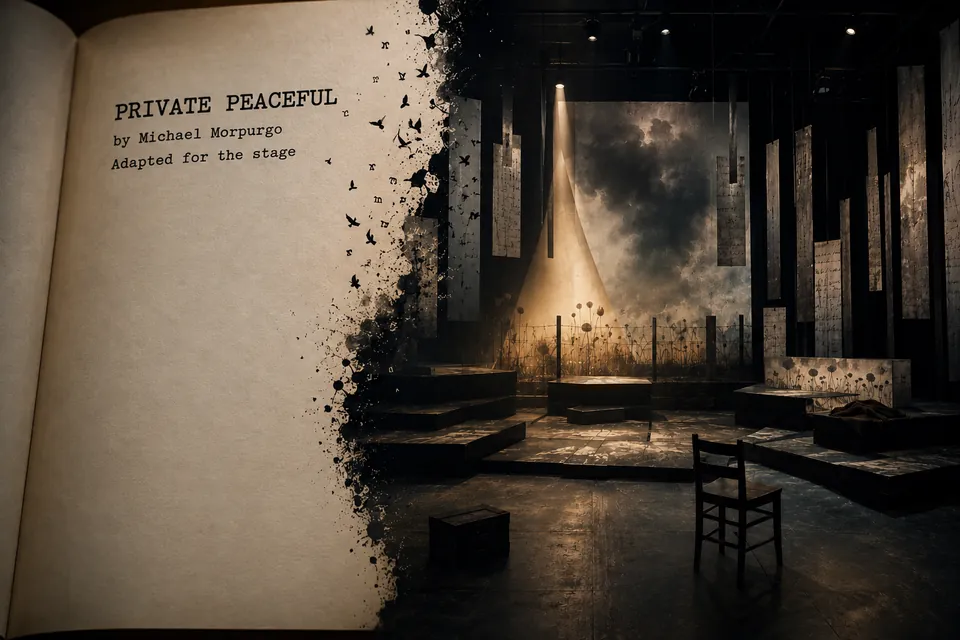
The unit
Private Peaceful by Michael Morpurgo · physical theatre, space, time and prop manipulation
Space, time and physicality are essential elements in shaping and communicating human experience and emotion.
What you hand in
Four things come out of this unit. Everything else is rehearsal.
A group extract from Private Peaceful, performed live and recorded.
Two lighting changes and two sound effects, planned before you perform.
Written as a group. Message. Emotions and atmosphere. Techniques. The impact you want on the audience.
Evidence and writing at three points across the unit, not all at the end.
What goes in your journal
Your journal opens three times this unit. Your teacher will tell you when. Each moment wants two things. Evidence you gathered at the time, then writing that explains it. Nobody is marking your spelling or how neat it looks. They are marking your thinking.
Capture it while it is still messy. A blurry rehearsal photo of something you were still figuring out is worth more than a tidy one taken afterwards and the versions you rejected are what prove extensive exploration.
Still images and transitions
- A photograph of each still image in your series.
- Label each one: which moment of conflict or separation is it and what emotion is it communicating?
- Get creative: photograph a version you rejected as well as the one you kept.
Respond“When wars begin, people often cheer. The sadness comes later.” What does this tell you about the world you need to create on stage?
AnalyseFor each still image: how did you use space, levels and physicality to communicate a different emotion? Which convention of an effective still image did you rely on most?
Rehearsal and artistic intention
- Two screenshots from your first full run through.
- Your group’s written artistic intention.
- Your Private Peaceful research: the play in performance, behind the scenes and what it is about.
- Get creative: a photograph of your colour coded script or of the props you chose and what you turned them into.
CaptureWhat did rehearsal change? Name the thing you tried first and abandoned and say why the second version was better.
DevelopHow does your research into the play feed the choices you are making in the room?
Cue sheet, performance and reflection
- Your completed cue sheet from Lesson 8.
- Your performance recording link, plus one production photograph.
- Get creative: a still from the recording with your own annotation on it.
ReflectDid the performance achieve your artistic intention? Name the exact moment where it worked or where it did not.
EvaluateWhat did your lighting and sound choices actually do for the audience? What would you change with two more lessons?
What a 5 and a 7 actually look like
Both of these answer the same journal question: your group’s written artistic intention.
In our performance of Private Peaceful, we want to show what war was like for soldiers. We are using physical theatre and manipulating props. We will use the space in different ways to make the performance interesting. We want the audience to feel sad for the soldiers and understand that war is bad.
In our performance of Private Peaceful, we want to show how the experience of war affects the soldiers physically and emotionally. In the gas attack scene, we will spread ourselves across the stage and move at different speeds rather than staying together. We will use quick, sudden movements to show the panic and confusion of the soldiers. Using the whole space and changing the speed of our movement should make the audience feel the chaos of the situation and understand what the soldiers are experiencing.
In contrast, in the market scene we will stay close together and move in unison. We will create a clear diagonal line across the stage and keep our movements controlled and together. This use of space and physicality shows the connection between the soldiers and creates a sense of safety before they go to war.
The contrast between the two scenes helps us explore the Statement of Inquiry because we are using space, time and physicality to communicate how the soldiers' experiences affect their emotions.
What’s the difference?
The 5 to 6 answer names some techniques and says what the group wants the audience to feel. The 7 to 8 answer gives us specific moments from the performance and explains:
- WHATwe are doing
- HOWwe are doing it
- WHYwe chose it
- WHATit communicates
- AUDIENCEwhat they see and understand
- SOIhow it explores the Statement of Inquiry
The strong answer doesn’t just say “we used space”. It tells us how the space was used, what changed because of that choice and what the audience could understand from it. It then makes the connection to the Statement of Inquiry clear.
Don’t just name a technique. Show me what you did with it, why it mattered and how it helped you communicate the human experience or emotion in the scene.